
A cleat that "looks strong" is not enough on a power circuit.
During a short circuit the cables in a run can pull towards or push away from each other with enough force to break weak fixings, damage the cable tray and put people at risk.
IEC 61914 gives specifiers, contractors and suppliers one common way to test and compare cleats, so you know exactly what a cleat has been proven to do. You can browse every cleat we stock in our cable cleats and ties range.
Browse Our Cable Cleat Ranges
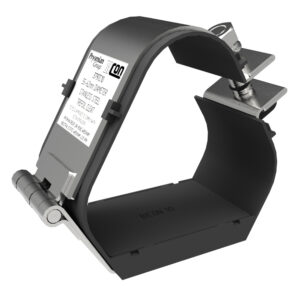
Trefoil Cable Cleats
View range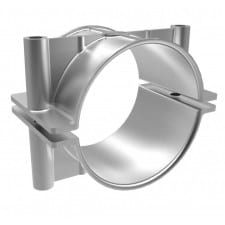
Metallic Single-Cable Cleats
View range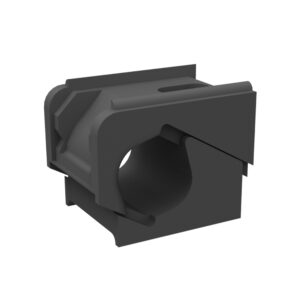
Non-Metallic Cleats
View range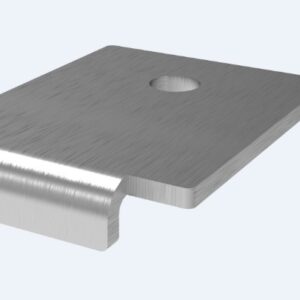
Cleat Accessories
View range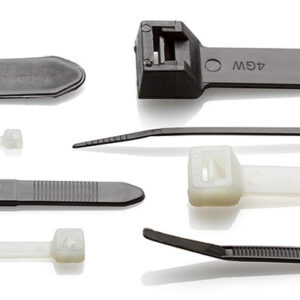
Cable Ties
View rangeWhat Is IEC 61914?
IEC 61914 is the International Electrotechnical Commission standard titled "Cable cleats for electrical installations".
It covers the requirements and tests for cable cleats that secure cables, and for intermediate restraints that hold cables together in formation.
It applies to cleats that rely on a mounting surface specified by the manufacturer, such as a cable ladder, tray, strut or rail, for lateral or axial retention of the cables.
What Does IEC 61914 Not Cover?
IEC 61914 does not apply to cable ties or cable glands. This is an important point for specifiers.
A cable tie cannot be "IEC 61914 compliant" as a cable cleat, so ties should not be relied on to restrain cables against short-circuit forces where a tested cleat is required.
How Does IEC 61914 Define A Cable Cleat?
IEC 61914 defines a cable cleat as a device with a means of attaching to a mounting surface, designed to secure cables when installed at intervals along their length.
Where declared, the cleat also gives resistance to electromechanical forces.
An intermediate restraint is defined separately. It is a device used with cable cleats, but not fixed to the mounting surface, to hold cables in formation between cleats and add short-circuit resistance.
Which Edition Of IEC 61914 Is Current?
The current edition is IEC 61914:2021, the third edition. It replaced the 2015 second edition, which itself replaced the original 2009 edition.
In the UK the standard is published as BS EN IEC 61914:2021, which is identical to IEC 61914:2021 and supersedes BS EN 61914:2016.
Before IEC 61914, cleats in Europe were covered by EN 50368:2003, which has since been replaced by the IEC standard.
What Changed In IEC 61914:2021?
The 2021 edition brought in clearer mandrel requirements for testing, test rules for MV and HV cables, new corrosion classes for plated products, and new tests for marking durability.
It also added axial load testing for cleats holding more than one cable, and lateral load testing for intermediate restraints.
It defines LV cables as those rated at 1.0kV AC or 1.5kV DC or less, and MV and HV cables as anything above that. This matters because short-circuit tests can now be carried out with higher voltage cables that better reflect the real installation.
How Does IEC 61914 Classify Cable Cleats?
IEC 61914 classifies cable cleats under six headings in Clause 6: material, temperature, impact resistance, type of retention and short-circuit resistance, environmental influences, and electromagnetic compatibility.
The manufacturer declares a classification under each relevant heading, so the information you get is directly comparable between products and brands.
Material
Temperature
Impact
Short-Circuit
Classification By Material (Clause 6.1)
Cleats are classified as metallic, non-metallic or composite.
In our range, metallic cleats include the Ellis Patents Alpha Aluminium Trefoil Cleats (Aluminium Base), the Prysmian Orion Aluminium Cleat (Standard) and the Prysmian Tetrad Cleat 381 Series in 316L stainless steel.
Non-metallic cleats include the Prysmian Plastic Two Bolt Cable Cleat (Standard) and the Ellis Patents Single Way Fixing Cable Cleat.
Composite designs, which combine a metal body with a polymer part, include the Ellis Patents Alpha Aluminium Trefoil Cleats (LSF Zero Halogen Base).
Classification By Temperature (Clause 6.2)
Each cleat is given a maximum and minimum temperature for permanent use, chosen from set values in the standard.
The maximum values are +40°C, +60°C, +85°C, +105°C and +120°C. The minimum values are +5°C, −5°C, −15°C, −25°C, −40°C and −60°C.
Manufacturers can declare figures outside this range where needed.
Temperature matters most for non-metallic and composite cleats, because polymers lose strength as they get hotter.
Classification By Impact Resistance (Clause 6.3)
Cleats are classified by impact resistance as very light, light, medium, heavy or very heavy.
A higher class means the cleat has passed a more severe impact test. That matters on sites where cleats could be struck during installation or later maintenance work.
Metallic, Non-Metallic And Composite Cleats In Our Range
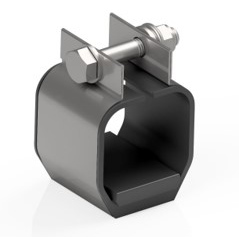
Prysmian Tetrad Cleat 381 Series
Metallic: 316L stainless steel.
View product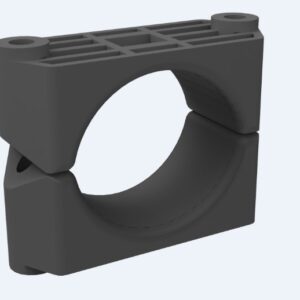
Prysmian Plastic Two Bolt Cable Cleat (Standard)
Non-metallic.
View product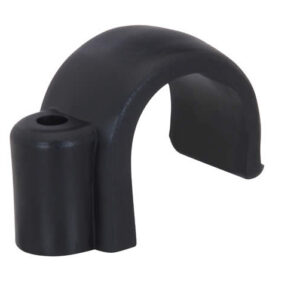
Ellis Patents Single Way Fixing Cable Cleat
Non-metallic.
View product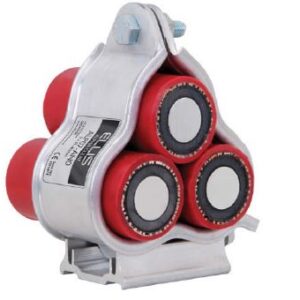
Ellis Patents Alpha (LSF Zero Halogen Base)
Composite: aluminium body, polymer base.
View productClassification By Retention And Short-Circuit Resistance (Clause 6.4)
Cleats are classified by whether they give lateral retention, axial retention, resistance to one short circuit, or resistance to more than one short circuit. This is the most important part of the standard for power circuits.
What Is Lateral Retention?
Lateral retention is the cleat's ability to hold the cable against a sideways load, for example when the cable run is fixed vertically or the cleat is mounted on its side.
The 2015 edition added declarations and tests based on how the cleat is mounted, so the declared lateral load is tied to a real mounting orientation.
What Is Axial Retention?
Axial retention is the cleat's ability to stop the cable sliding along its length, which is important on vertical runs and inclines.
The 2021 edition added axial load test rules for cleats that hold more than one cable, such as trefoil and quad cleats.
What Is The Difference Between Withstanding One Short Circuit And More Than One?
A cleat classified as withstanding one short circuit must still hold the cables safely after a single fault, while a cleat classified as withstanding more than one short circuit must survive a second fault and still pass a voltage test on the cables afterwards.
The multiple short-circuit class is the higher level of performance. It is often specified where the installation must stay in service after a fault has been cleared.
Classification By Environmental Influences (Clause 6.5)
Cleats can be classified as resistant to ultraviolet light (for non-metallic and composite parts) and resistant to corrosion (for metallic and composite parts).
UV resistance is critical for outdoor polymer cleats. The Prysmian Plastic Two Bolt Cable Cleat (Afumex LSOH) is described as resistant to sunlight, weather, oils and most chemicals.
For corrosive sites we also stock epoxy coated cleats such as the Prysmian Orion Aluminium Cleat (Epoxy Coated) and the Prysmian Aluminium Two Bolt Cleat (Epoxy Coated).
Classification By Electromagnetic Compatibility (Clause 6.6)
Cleats are classified as either liable or not liable to inductive heating.
Ferrous metals that fully surround a single-core AC cable can heat up from induced currents. This is why trefoil cleats for single-core cables are usually made from non-magnetic materials such as aluminium, non-magnetic stainless steel or polymer.
Our aluminium trefoil options include the Ellis Patents Alpha, Prysmian Orion and Prysmian Libra Aluminium Cleats.
Cleats For Outdoor And Corrosive Sites
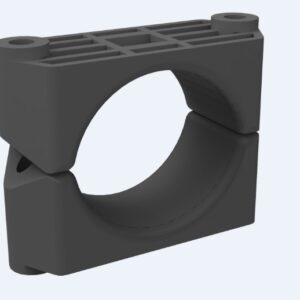
Prysmian Plastic Two Bolt Cable Cleat (Afumex LSOH)
Resistant to sunlight, weather, oils and most chemicals.
View product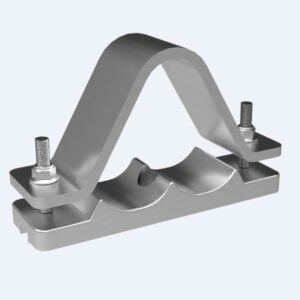
Prysmian Orion Aluminium Cleat (Epoxy Coated)
Epoxy coated aluminium trefoil cleat.
View product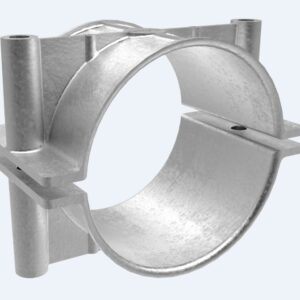
Prysmian Aluminium Two Bolt Cleat (Epoxy Coated)
Epoxy coated aluminium single cable cleat.
View product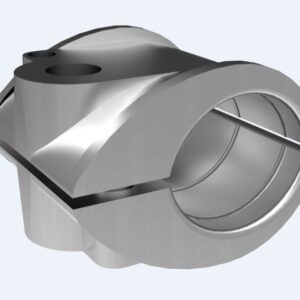
Prysmian Aluminium Claw Cleat (Epoxy Coated)
Epoxy coated aluminium claw cleat.
View productHow Is The IEC 61914 Short-Circuit Test Carried Out?
The IEC 61914 short-circuit test passes a three-phase fault through a run of cables fixed with the cleats under test, at the manufacturer's declared peak current, for at least 0.1 seconds.
One end of the cables is connected to a three-phase supply and the other end to a busbar that shorts all three phases together.
The cables are restrained at a minimum of five positions along the run. Where intermediate restraints are used, there must be at least four cleats and three intermediate restraints, all equally spaced.
What Has To Be Declared For The Test?
The manufacturer must declare the peak short-circuit current (ip), the initial RMS symmetrical short-circuit current (I"k), the cleat spacing and the cable arrangement used.
The 2015 edition also added a declaration of the distance between cable centres. These figures are what you compare against your own design.
A rating such as 96kA peak is only meaningful alongside the spacing and cable diameter it was tested with.
What Counts As A Pass?
To pass, the cleats and any intermediate restraints must stay intact with no missing parts (minor deformation is allowed), and the cables must stay secured without damage that would affect their safety.
For the higher classification, the setup must survive a second short circuit and then pass an AC or DC voltage test. This proves the cable insulation has not been damaged by the cleats.
What Do The Lateral And Axial Load Tests Involve?
The lateral load test applies the manufacturer's declared load to a test mandrel held in the cleat.
The axial load test pulls the mandrel along its length to check it does not slip more than a set amount. Both tests use mandrels that represent the cable sizes the cleat is designed for.
Non-metallic and composite cleats are tested at their maximum declared temperature, because that is when polymers are at their weakest.
Why Is The Test Only 0.1 Seconds Long?
The 0.1-second minimum covers the first peak of the fault, which is when the electromechanical forces are at their highest. At 50Hz this is five full cycles, which is enough to show whether the cleat will hold.
The first peak is the point of greatest risk, because that is when cables try hardest to break out of their fixings.
🧮 Free Cable Size Calculator
You determine correct cable sizes. You input voltage parameters. You input load requirements. Our tool ensures BS 7671 compliance. You avoid costly specification errors.
Which Of Our Cable Cleats Are Built For IEC 61914 Applications?
Our metallic trefoil, quad and heavy duty cleats are the products designed for high fault level power circuits where an IEC 61914 short-circuit classification is normally specified.
The Ellis Patents Alpha is listed as tested to IEC 61914:2009 with a short-circuit withstand of up to 96kA peak at 600mm centres.
For any cleat, we can help you get the manufacturer's declared classification and test data so you can check it against your fault calculations.
Aluminium Trefoil Cleats
Aluminium trefoil cleats are the most common choice for single-core LV, MV and HV circuits laid in trefoil, because they combine high strength with no inductive heating.
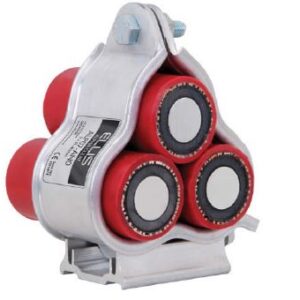
Ellis Patents Alpha Aluminium Trefoil Cleats (Aluminium Base)
Extruded aluminium, 23.2mm to 74.6mm. Up to 96kA peak at 600mm centres.
View productEllis Patents Alpha Aluminium Trefoil Cleats (LSF Zero Halogen Base)
The same aluminium cleat with an LSF zero halogen base.
View product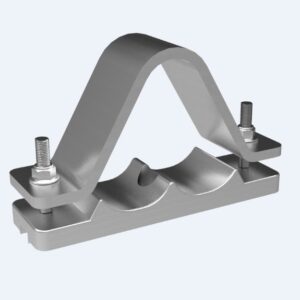
Prysmian Orion Aluminium Cleat (Standard)
Trefoil cleat for LV, MV and HV cables, 62mm to 186mm, with a deep cast base.
View productPrysmian Orion Aluminium Cleat (Epoxy Coated)
Epoxy coated Orion for LV, MV and HV cables, 62mm to 186mm.
View product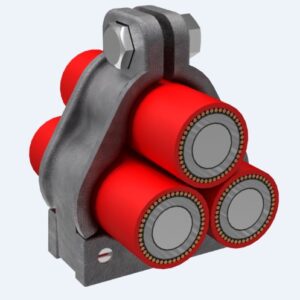
Prysmian Libra Aluminium Cleats
For single-core cables in trefoil, 24mm to 76mm.
View productStainless Steel Trefoil And Quad Cleats
Stainless steel cleats are chosen where the highest fault levels meet the harshest environments, such as offshore, petrochemical and tunnel installations.
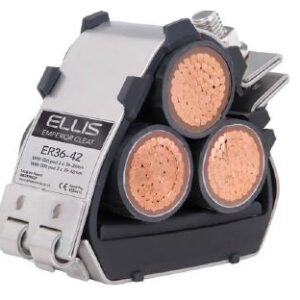
Ellis Patents Emperor Trefoil Stainless Steel Cable Cleats
Heavy duty, compact stainless steel cleats for single or trefoil cables, 19mm to 128mm.
View product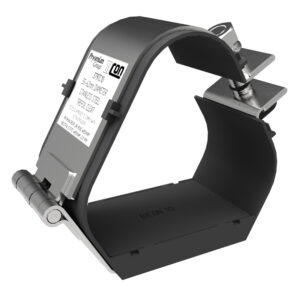
Prysmian Sirius Stainless Steel Trefoil Cleat
379 series, designed for the harshest environments under the highest fault conditions, 23mm to 128mm.
View product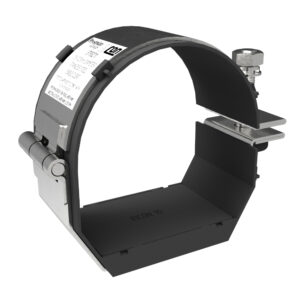
Prysmian Orbit Stainless Steel Cleat
379 series heavy duty stainless option, 33mm to 150mm.
View productPrysmian Tetrad Cleat 381 Series
316L stainless steel, for four single-core cables in quad formation, 20mm to 70mm.
View productStrap Cleats And Multi-Cleats
Strap-based systems are useful where one fixing needs to cover a range of cable diameters or formations. Both Multicleats use an aluminium base, a stainless steel strap and a tensioning clip.
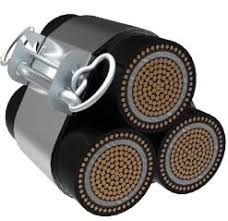
Prysmian Multicleat (Standard Aluminium Alloy Plain Base)
View product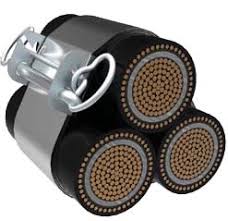
Prysmian Multicleat (Heavy Duty Aluminium Alloy Plain Base)
View productSingle Cable Cleats
Single cable cleats secure individual armoured or single-core cables, and IEC 61914 still sets the test method for their material, temperature, impact and retention classes.
Our range covers every mounting variant of the TE Connectivity single cable cleat, made in V0 flame retardant polymer for LV, MV and HV cables from 15mm to 135mm.
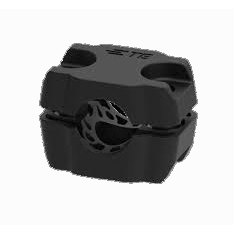
TE Single Cable Cleat - Cable Cleat Only
Can be upgraded to any mounting variant.
View product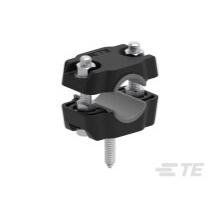
TE Single Cable Cleat - Centre Mount Version
View product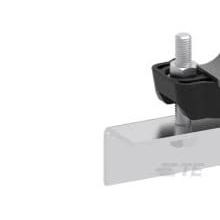
TE Single Cable Cleat - Flat Mount Version
View product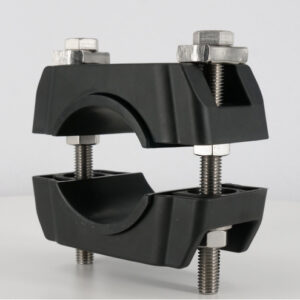
TE Single Cable Cleat - Strut Nut Mounting
View product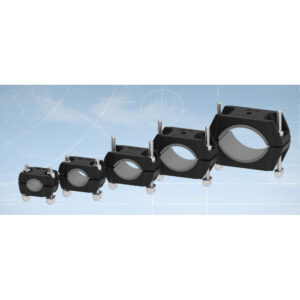
TE Single Cable Cleat - With Insert
Insert for extra grip and cable protection.
View productWe also supply metallic single cable cleats, including the Prysmian Aluminium Claw Cleat (Standard), which is LUL approved, and the Prysmian Aluminium Two Bolt Cleat (Standard).
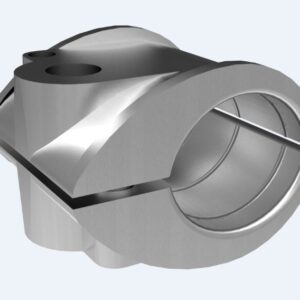
Prysmian Aluminium Claw Cleat (Standard)
LUL approved.
View product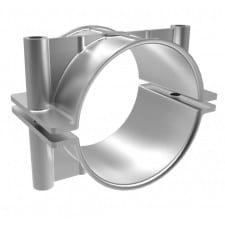
Prysmian Aluminium Two Bolt Cleat (Standard)
View productNon-metallic single options include hook, Ranger and Telcleat designs from Prysmian, and single way and two hole designs from Ellis Patents.
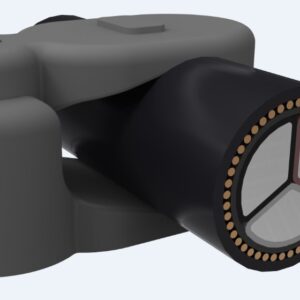
Prysmian Heavy Duty Hook Cleat
View product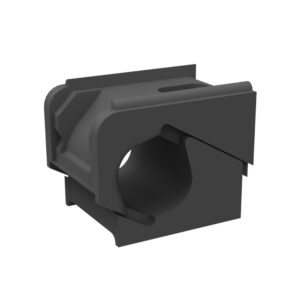
Prysmian Ranger Cleat
View product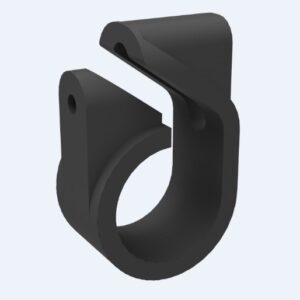
Prysmian Telcleats (Standard)
View product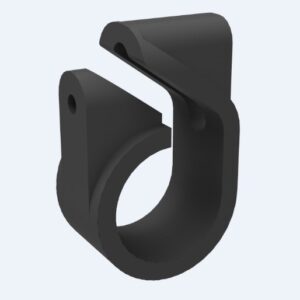
Prysmian Telcleats (Afumex LSOH)
View product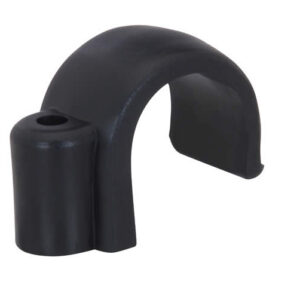
Ellis Patents Single Way Fixing Cable Cleat Flame Retardant
View product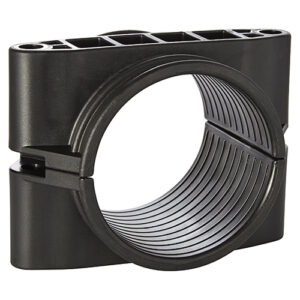
Ellis Patents Two Hole Cable Clamp (Standard)
View product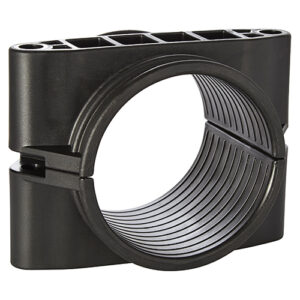
Ellis Patents Two Hole Cable Clamp (LSF)
View productHow Do You Specify An IEC 61914 Compliant Cable Cleat?
To specify an IEC 61914 compliant cleat, calculate the peak fault current of the circuit, then choose a cleat whose declared short-circuit classification meets or exceeds it at your planned spacing, cable diameter and formation.
After that, check the material, temperature, impact, environmental and inductive heating classes against site conditions.
Start With The Prospective Fault Current
The peak short-circuit current (ip) of the circuit is the key number, because the cleat's declared rating has to be at least this high.
Short-circuit force rises with the square of the current, so a small increase in fault level makes a big difference to the force the cleat must hold.
Match The Tested Spacing
Install cleats at or closer than the spacing used in the manufacturer's IEC 61914 test.
A cleat that passed at 600mm centres has not been proven at 900mm. Closer spacing lets the run withstand higher fault currents.
Match The Cable Formation And Diameter
Use the cleat in the same formation it was tested in (single, trefoil or quad) and within its declared diameter range.
A cleat that is too large will not grip properly, while one that is too small can damage the cable sheath.
Our cable cleat size chart matches overall cable diameter to the correct cleat size.
Check The Fire Performance
IEC 61914 includes fire hazard requirements covering flame propagation, smoke emission and smoke toxicity, so check these where cleats are used in enclosed or public spaces.
In tunnels, rail, hospitals and data centres, LSOH or LSF cleats are often specified.
In the UK, BS 7671 also requires wiring systems to be supported so they do not collapse too early in a fire, which often points towards metallic fixings on escape routes.
Check The Marking And Documentation
Every cleat should be marked and backed by documentation that states its IEC 61914 classification.
The 2021 edition added tests for marking durability and legibility, so markings stay readable throughout the life of the installation.
Do Cable Ties Need To Meet IEC 61914?
No, cable ties are outside the scope of IEC 61914, so a tie cannot be classified as a cable cleat under this standard.
Ties are still very useful for bundling and tidy cable management alongside cleats. We stock a full range in our cable ties category.
Cable Ties For Use Alongside Cleats
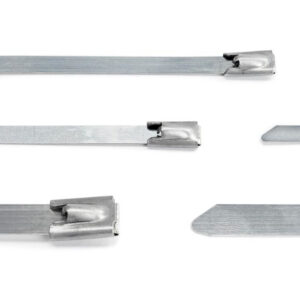
Partex Stainless Steel Cable Ties
316 stainless steel, fireproof, UV resistant and halogen free, rated from −80°C to +500°C.
View product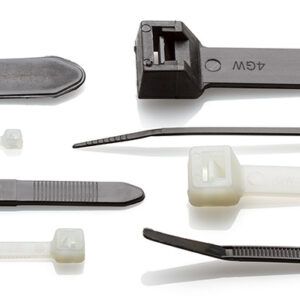
Partex Non-Releasable Nylon Cable Ties
For permanent bundling.
View product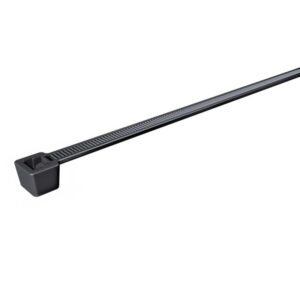
Hellermann Tyton Nylon Cable Ties - Inside Serrated
For a secure grip on cable bundles.
View productWhich Accessories Help Cleats Perform As Tested?
Fixing accessories make sure the cleat is mounted securely to the surface it was tested on, which is essential because IEC 61914 performance depends on the mounting surface the manufacturer specifies. We stock a range of cleat accessories:
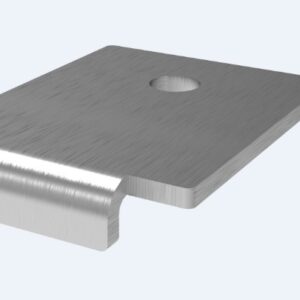
Prysmian Cable Cleat Accessories - Adaptor Plate
View productPrysmian Cable Cleat Accessories - Lindaptor Fitting
Hot-dip galvanised cast iron plate (reference 3389AA03) for clamping to steel sections.
View product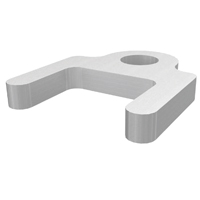
Prysmian Cable Cleat Accessories - Packing Piece
View productFor the containment the cleats fix to, see our cable support and management range.
How Can Cable Services Help You Meet IEC 61914?
We help you meet IEC 61914 by supplying cleats from leading manufacturers and helping you match each product's declared classification to your fault level, spacing and site conditions.
Because we stock Prysmian, Ellis Patents and TE Connectivity side by side, we can recommend the right cleat for the job rather than a single brand.
We also supply the cable itself, and our cable cutting service means your cable and cleats can arrive together, ready to install.
Whether your project is in utilities, rail, power generation, data centres or renewables, our team is here to help.
Browse our full cable cleats and ties range or contact us to discuss your IEC 61914 requirements.
Frequently Asked Questions About Cable Cleats And IEC 61914
Is IEC 61914 Mandatory In The UK?
IEC 61914 is not a law in itself, but it is the recognised standard for cable cleats and is routinely required in UK project specifications, utility standards and client requirements.
In practice, designers and specifiers expect cleats on power circuits to have a declared IEC 61914 classification.
What Is The Difference Between IEC 61914 And BS EN IEC 61914?
There is no technical difference.
BS EN IEC 61914:2021 is the UK publication of the European adoption of IEC 61914:2021, and its content is identical.
Does A Cleat Tested To IEC 61914:2009 Or 2015 Still Count?
Cleats tested to earlier editions remain valid evidence of the performance shown in that test, but the 2021 edition adds further test requirements.
Where a project specifically calls for IEC 61914:2021, check with us which edition the manufacturer's test data refers to.
What Short-Circuit Rating Do I Need?
You need a cleat rated at or above the peak short-circuit current (ip) of your circuit, at the spacing and cable diameter you plan to install.
Your electrical designer's fault level calculation gives this figure. Our team can then help you shortlist suitable cleats.
Are Plastic Cleats Covered By IEC 61914?
Yes, non-metallic and composite cleats are covered by IEC 61914 and are classified and tested in the same way as metallic cleats, including at their maximum declared temperature.
However, plastic cleats generally have lower short-circuit withstand than aluminium or stainless steel, so they are not usually chosen for high fault level trefoil circuits.
Ready To Specify Your IEC 61914 Cable Cleats?
Contact our technical experts for project support, short-circuit withstand calculations, and immediate stock availability.
Request A Custom Quotation